Back to the catalogue
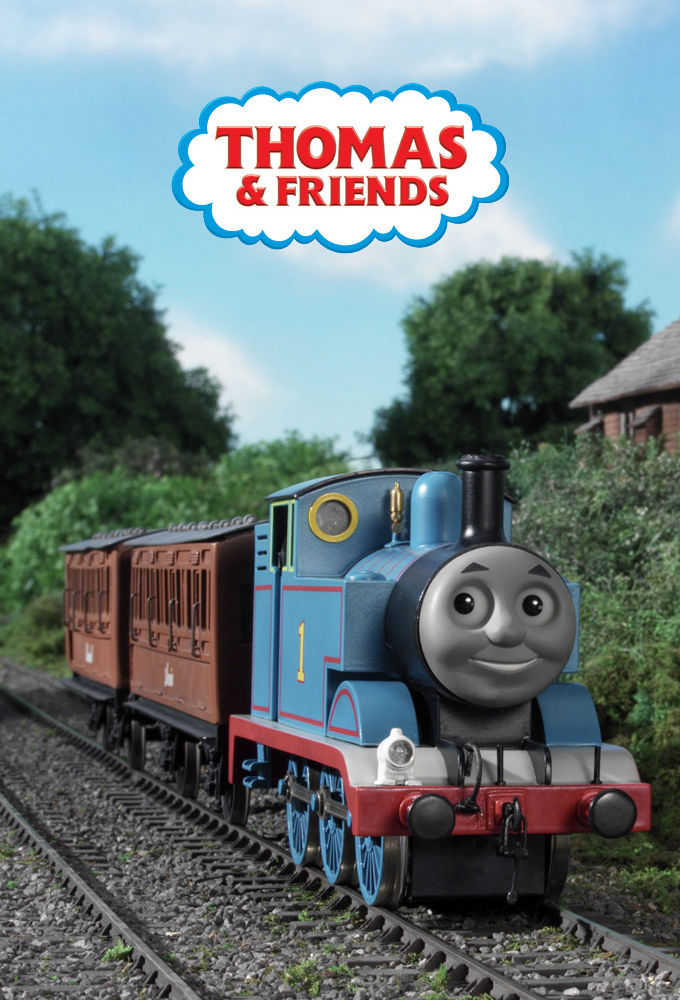
Cover art for Thomas & Friends
TV Show

Thomas & Friends

Rev. W. Awdry · 1984

Community discernment

No reviews yet

Biblical soundness

—

0 community reviews

Ages 3+

Features industrial settings and train crashes.

The story

Story and themes

Thomas & Friends follows the daily operations of a railway on the fictional Island of Sodor, centered on a group of anthropomorphic steam engines and other vehicles. Each engine possesses a unique personality and specific duties, often leading to disagreements, misunderstandings, or lapses in judgment.

The primary conflict typically involves these engines attempting to be truly useful while navigating the expectations of their manager, the Fat Controller, and learning to work together despite their differing temperaments.

The narrative is rooted in a moral framework where hard work, reliability, and cooperation are consistently rewarded, while vanity, pride, and disobedience result in logistical mishaps or public reprimands. It serves as a gentle exploration of social development, illustrating how individual flaws impact a community and the value of reconciliation after a mistake.

The tone is whimsical and orderly, consistently reinforcing the importance of duty and the virtues of patience and diligence. Content-wise, the series is designed for a young audience and is almost entirely devoid of mature elements.

The drama is confined to industrial-themed accidents such as train derailments, heavy collisions, or minor damage to property, which are portrayed with a focus on consequences rather than injury.

Occasional instances of mild peril or engine frustration occur, but there is no graphic violence, coarse language, or occult influence, making it a mild and straightforward viewing experience.

AI-assisted analysis

Through a biblical lens

01

Underlying Worldview

The world of Thomas and Friends operates on a foundation of meritocratic morality where value is derived from utility, obedience to authority, and the fulfillment of one's designated role. Characters are judged by their ability to be 'really useful,' a framework that mirrors an industrious, duty-bound society.

While this structure promotes social harmony and the value of hard work, it occasionally borders on a performance-based acceptance where a character's worth is tied exclusively to their productivity and adherence to the rules set by the Fat Controller.

At its core, the narrative reinforces a traditionalist worldview where order is seen as the highest good. Conflicts typically arise when engines act impulsively or selfishly, disrupting the established systems of the railway.

The resolution consistently emphasizes repentance, reconciliation, and a return to one's station, suggesting that peace is found when every individual aligns themselves with the greater purpose of the community.

The philosophy driving the story

02

Redemptive Themes

The series frequently explores the themes of grace, forgiveness, and restoration. Engines often make mistakes, act out of pride, or fail to meet expectations, yet the narrative almost always leaves room for them to be redeemed.

Rather than being discarded for their failures, characters are given opportunities to learn, grow, and demonstrate reliability, illustrating a model of mercy that values the restoration of the relationship over mere punitive action.

Furthermore, the show celebrates communal cooperation and the dignity of vocational contribution. Each engine has a specific design and purpose, and when they function in harmony, the community thrives.

This reflects the biblical principle of the body of Christ, where diverse members work together for the common good, acknowledging that every role, no matter how small, is essential to the functioning of the whole.

Truth, grace and beauty reflected

03

Cautionary Elements

While the series is generally wholesome, parents should be aware of the underlying utilitarian philosophy. By equating moral goodness exclusively with being useful, the show may inadvertently suggest that individuals possess value only when they are productive.

This can be a subtle point of confusion for young viewers who are still learning that their inherent worth is defined by their status as created beings in the image of God, regardless of their 'utility' or output.

Additionally, the show occasionally portrays authority figures as infallible, which can lead to a blind deference to hierarchy. While obedience is a biblical virtue, it is important to teach children that ultimate allegiance belongs to God alone.

Occasional moments of teasing, bullying, or prideful posturing among the engines serve as depictions of human failings, which, while meant to be cautionary, require parental mediation to ensure children understand that these behaviors are indeed flaws to be avoided.

Content and theological warnings

04

Family Summary

Thomas and Friends is an excellent, safe, and wholesome choice for young children. Its focus on hard work, social cooperation, and the importance of saying sorry provides a gentle environment for character building. Parents can easily co-view these stories and use the engines' social blunders as simple, effective conversation starters about kindness, honesty, and forgiveness.

It is highly suitable for family viewing and serves as a positive, low-conflict introduction to narrative themes of responsibility and reconciliation.

Guidance for Christian parents

Machine-assisted reflection — weigh it against Scripture and your own community.

Share this discernment

Community reviews

Weighed by readers

Add your review

Discernment rating
Biblical soundness

No one has reviewed this title yet. Yours would be the first.

Every story teaches a view of the world. We name what it is teaching, so you can decide what your family watches, reads and plays.

Scripture-rooted · AI-assisted · Community-reviewedA tool for discernment, not a substitute for Scripture or pastoral counsel.